



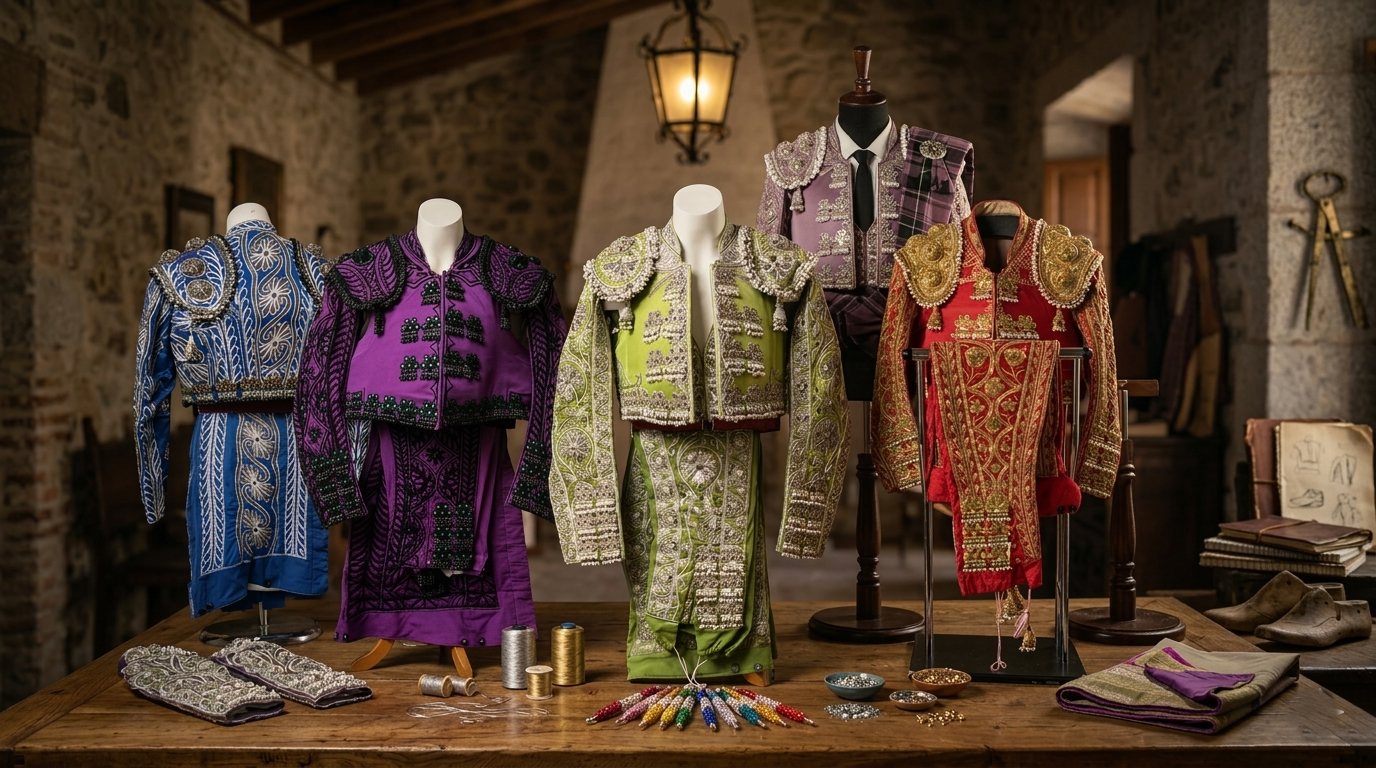
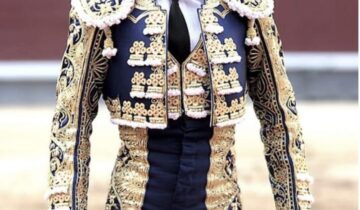
The bullfighter costume — known in Spanish as the traje de luces, or suit of lights — is far more than a garment. It is a hand-crafted work of art, a living symbol of Spanish culture that can weigh up to twelve kilograms and require over a thousand hours of hand embroidery. Every golden thread, every alamar clasp and every sequin that catches the afternoon sun tells a story of courage, elegance and tradition stretching back more than three centuries.
To understand the bullfighter costume as we know it today, we must travel back to 18th-century Spain, when bullfighting was beginning to take shape as a public spectacle with its own defined aesthetics. What emerged from the everyday clothing of Andalusian workers would eventually become one of the most admired garments in the world. Below, we trace its history, explore its anatomy and share the secrets of preserving it. For more, visit our bullfighting curiosities blog or browse our full bullfighter costume collection.
The Origins of the Bullfighter Costume
In its earliest form, bullfighting was practiced by noblemen on horseback as a display of skill and bravery. It was the common people who, without horses, began fighting bulls on foot — wearing their everyday working clothes: tight breeches, stockings, a short jacket and a wide-brimmed hat. There was no uniformity or aesthetic code; each bullfighter dressed according to his means.
The real turning point came in the mid-18th century with the Romero family of Ronda. It was their grandson, Pedro Romero, who began to systematise both technique and dress. The influence of 18th-century French fashion — richly embroidered coats, fitted breeches, silk stockings — merged with traditional Andalusian working dress. From this fusion emerged the aesthetic blueprint that would define the bullfighter costume forever.
Goya and the immortalisation of the suit of lights
It was Francisco de Goya who immortalised these early costumes in his celebrated series La Tauromaquia (1816). His engravings fixed the visual identity of the matador’s dress and elevated bullfighting to the status of a national art form, recognised across Europe.
Why is it called the “suit of lights”?
Throughout the 19th century, metallic thread embroidery became increasingly elaborate. Under the blazing afternoon sun of a bullfight, the gold and silver threads created flashes of light visible from every seat in the arena. For this reason, crowds began calling it the suit of lights — a name that survives to this day and perfectly captures its essence.


Three Centuries of the Bullfighter Costume
The history of the bullfighter costume mirrors the evolution of Spanish bullfighting itself. Over three centuries, the matador’s dress transformed from everyday working clothes into internationally recognised haute couture craftsmanship. The timeline below captures the key moments in that journey.
The First Steps
Bullfighting on foot using everyday working clothes. No uniformity or specific ornamentation for the ring.
The Ronda School
Pedro Romero systematises technique and dress. The embroidered jacket is born, shaped by French Rococo influence.
Goya — La Tauromaquia
The engravings immortalise the costume and elevate bullfighting to a nationally recognised art form across Europe.
The “Suit of Lights” Is Named
Gold and silver embroidery gleams so brightly in the sun that the name is born. The first great tailoring workshops open in Seville and Madrid.
The Modern Age
Guerrita, Joselito and Belmonte bring the costume to its peak: shorter jacket, richer ornamentation, greater theatrical presence.
Bullfighting Haute Couture
Centuries-old craft meets contemporary materials. Justo Algaba in Madrid remains the world’s foremost reference.
“The bullfighter costume transforms a man into a symbol and the bullring into the stage of a ceremony that has moved the world for centuries.”Spanish Bullfighting Culture
The Eight Pieces of the Bullfighter Costume
The bullfighter costume consists of eight perfectly coordinated pieces that together create one of the most recognisable outfits on the planet. Each piece serves both an aesthetic and a practical purpose inside the bullring.
The main garments of the matador suit
The Jacket
Chaquetilla — short and form-fitting, richly embroidered. Can weigh over 3 kg on its own.
The Breeches
Calzón — fitted to just below the knee, matching fabric and colour to the jacket.
Inner Breeches
Taleguilla — silk undergarment. Protects the skin and allows freedom of movement.
The Stockings
White or pale pink natural silk. An essential emblem of the torero’s elegance.
The Sash
Fajín — silk waist sash that cinches the core and provides abdominal support during the fight.
The Hat
Montera — jet-black bicorne hat; one of Spain’s most iconic silhouettes.
The Shoes
Zapatillas — thin-soled slippers for maximum ground feel, balance and precision.
The Embroidery
Metallic thread, sequins and passementerie. Between 600 and 1,200 hours of skilled artisan work.
Weight and craftsmanship: figures that astonish
Together, the full bullfighter costume can exceed twelve kilograms in weight, which is why matadors spend time conditioning their bodies to the load before the season begins. The embroidery on a single jacket can alone account for up to eight hundred hours of a specialist embroiderer’s time — yet every hour is evident in the finished piece. The suit of lights is, in every sense, both craft and fine art.
The Colors of the Bullfighter Costume and Their Symbolism
The color of a bullfighter costume is never a trivial choice. Each combination projects a distinct personality and defines the torero’s aesthetic identity for life. Below are the most common pairings and their meaning within Spanish bullfighting tradition.
| Bullfighter costume color | Meaning & tradition |
|---|---|
| Gold & Black | The most classic and distinguished combination. Sobriety and refinement without compromise. |
| Red & Gold | Passion, courage and temperament. The color of historic afternoons in the ring. |
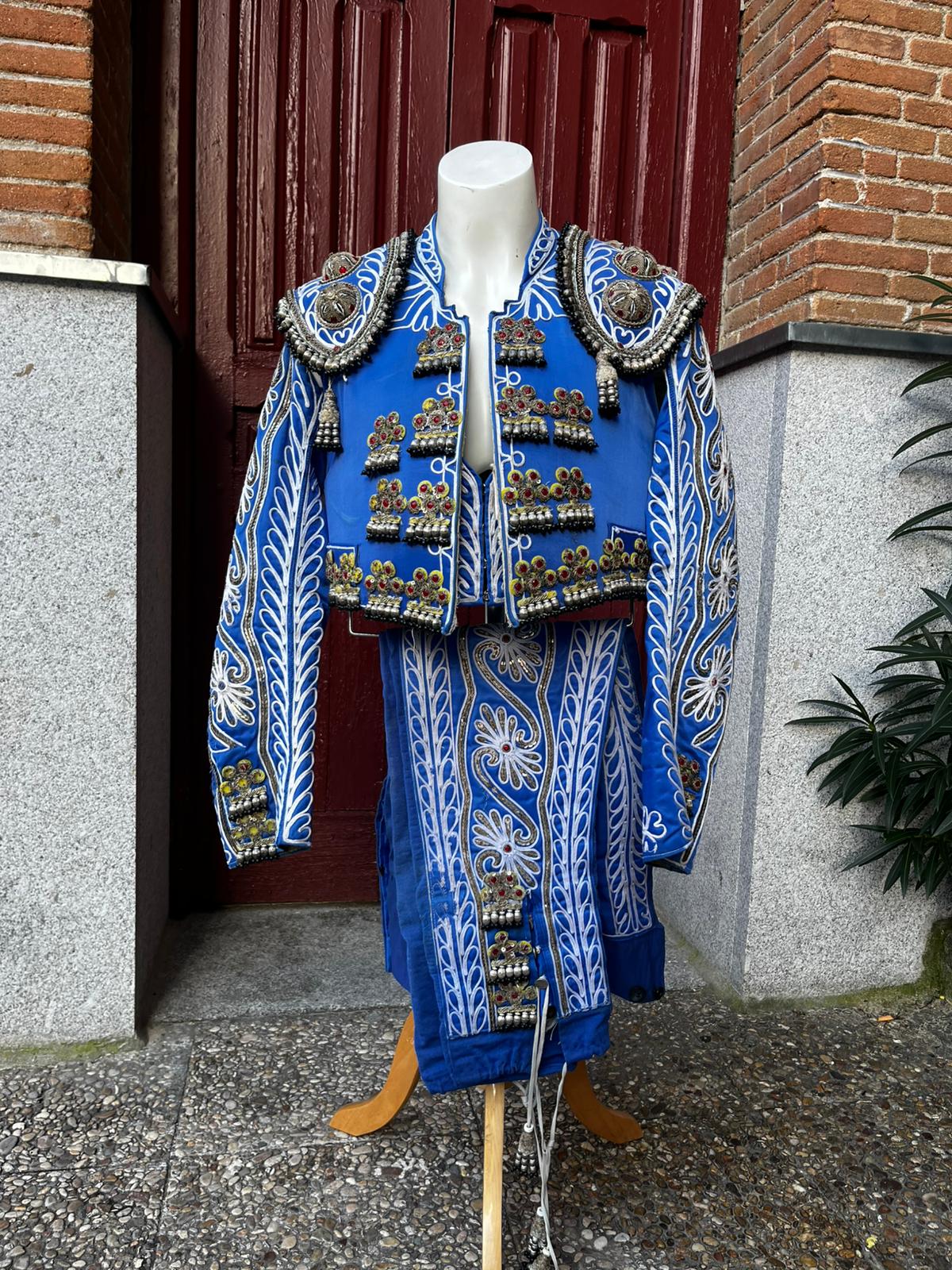
| Blue & Silver | Serenity and imposing presence. Silver on blue creates a uniquely luminous effect. |
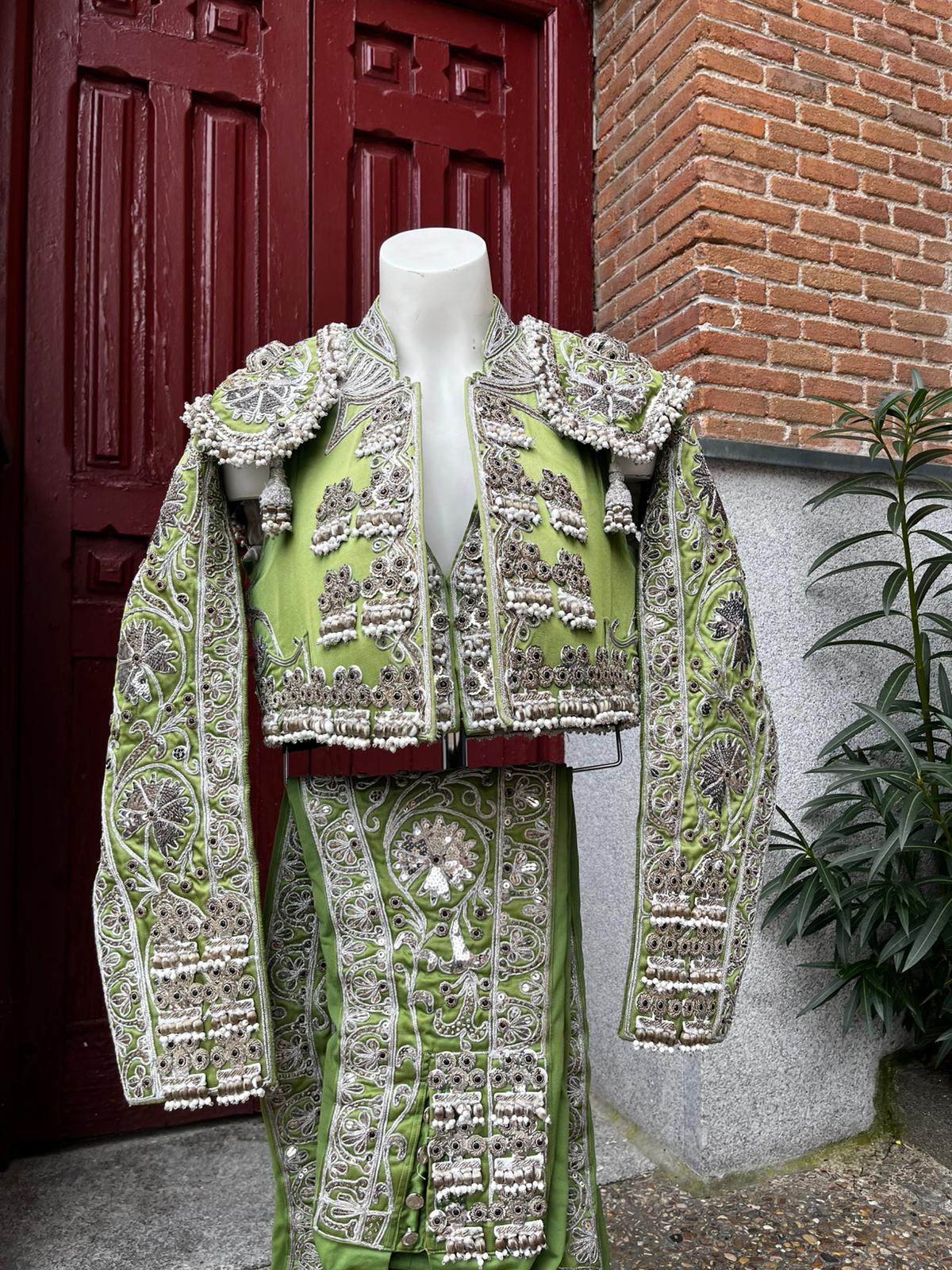
| Green & Silver | Understated elegance. Associated with toreros of a distinctly personal style. |
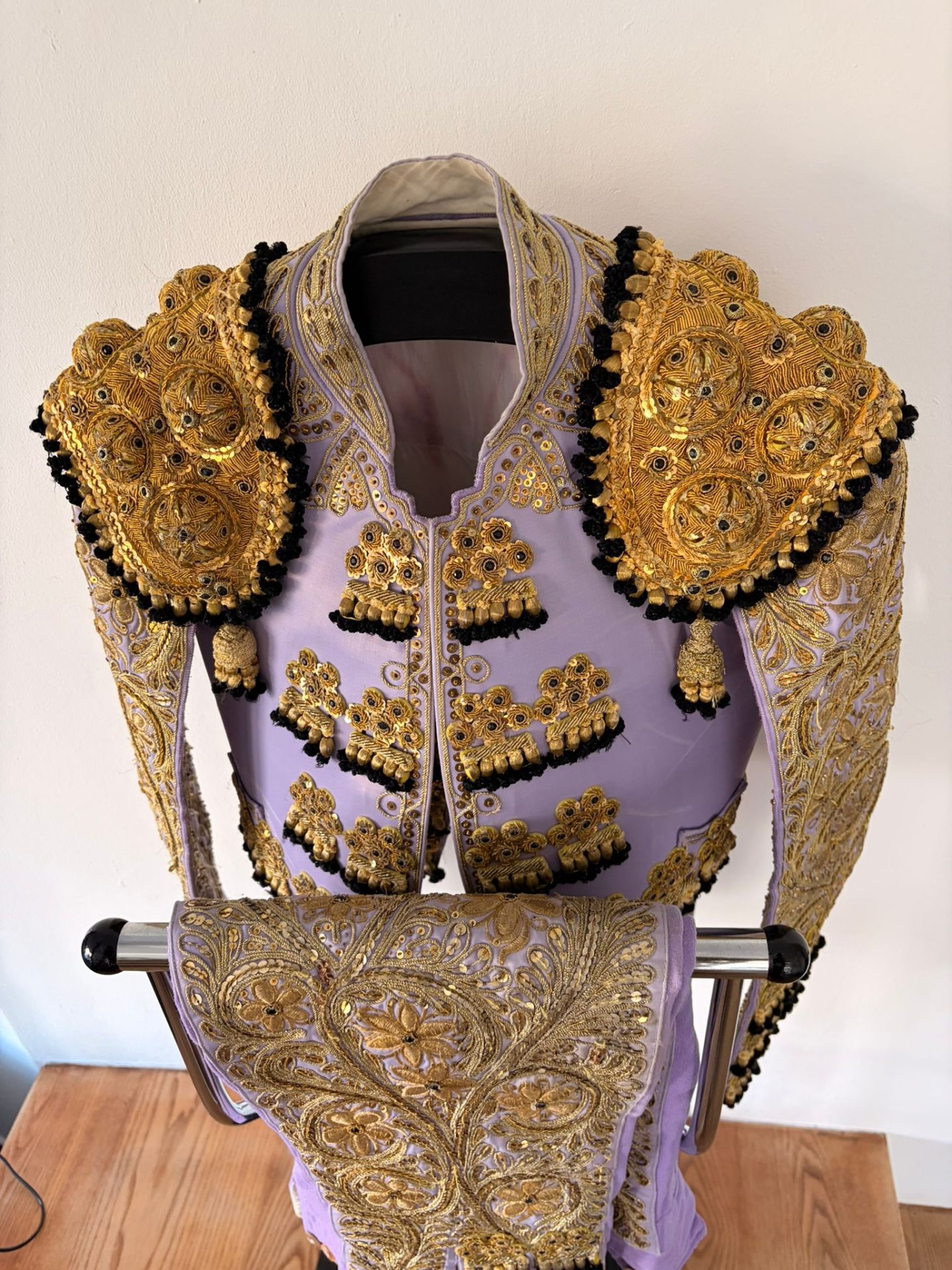
| Mauve & Gold | Refinement and artistic sensibility. A choice that sets the wearer apart. |
| Lime & Gold | Boldness and modernity. Maximum visual impact in the arena. |
How to choose the color of a bullfighter costume
Choosing the right color is a deeply personal decision for each torero. That said, there are practical considerations worth bearing in mind. Darker shades such as black or navy conceal arena dust and sand more effectively, while vivid colors like red or lime offer greater visual impact and crowd presence. Ultimately, the most important factor is that the torero feels at home in his choice.
How to Care for a Bullfighter Costume
A well-maintained bullfighter costume can last for decades without losing its artistic splendour or monetary value. Applying the correct care from day one is essential. If you have specific questions about upkeep, visit our curiosities section or contact our team directly.
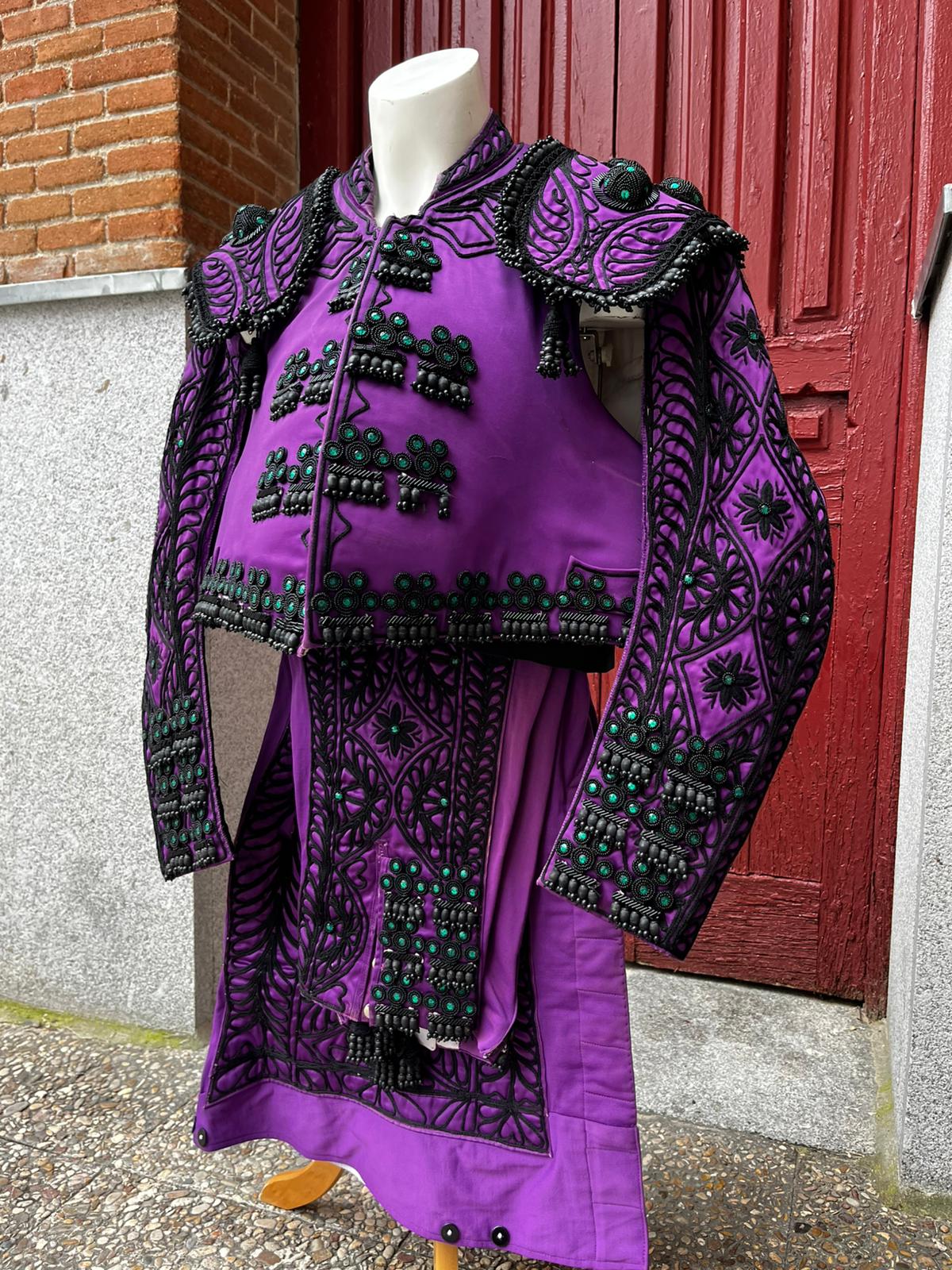
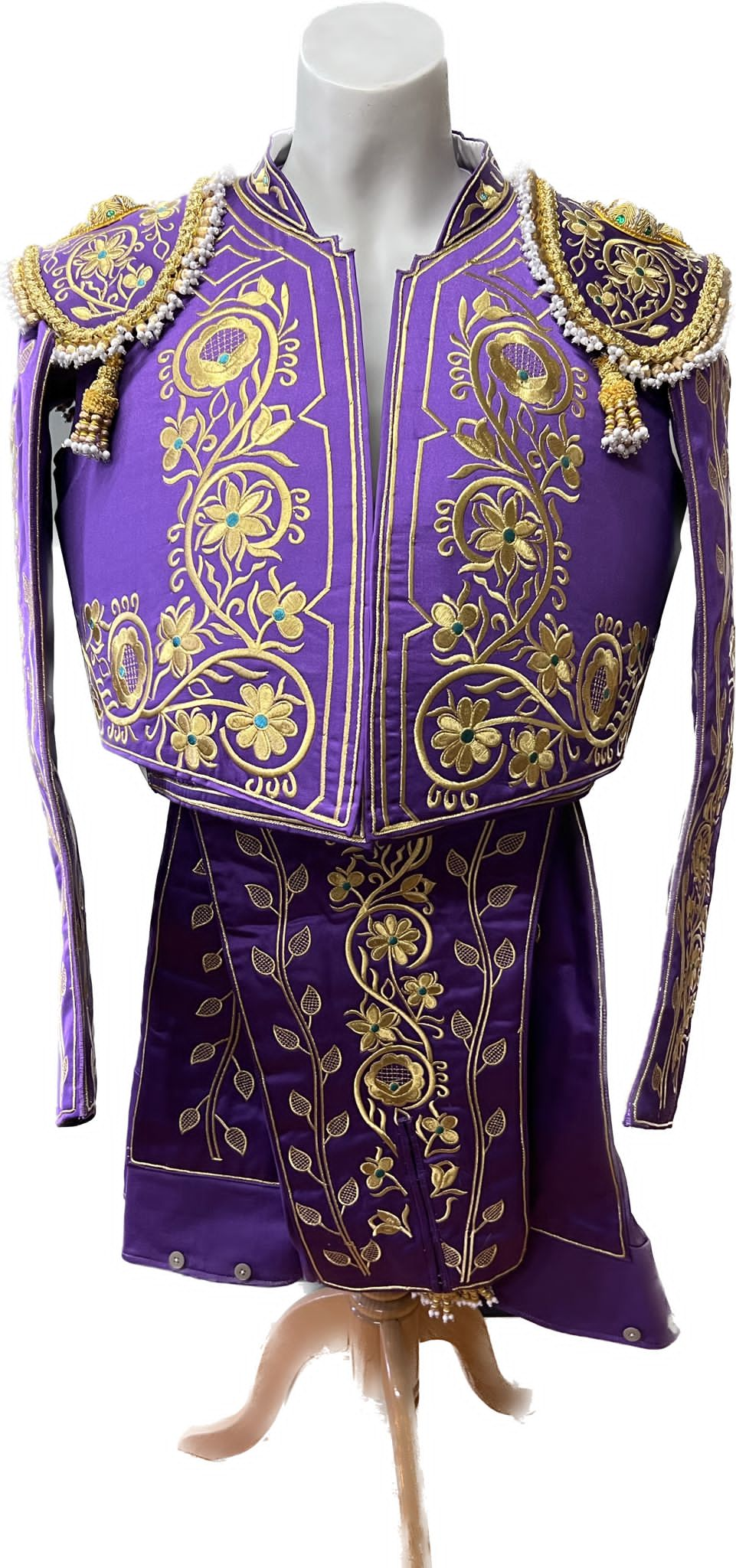
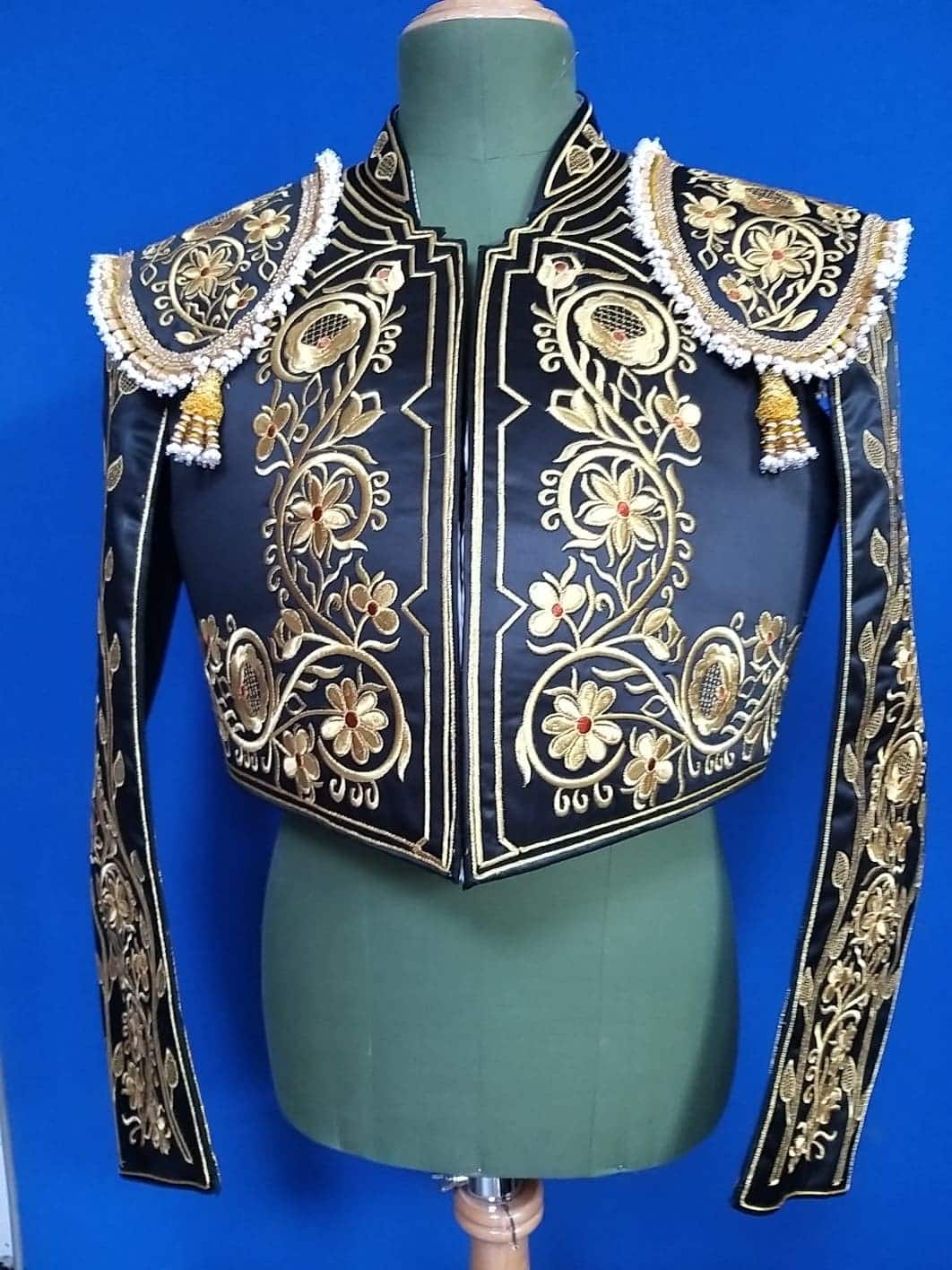
Bullfighter Costumes at TorоShopping
Authentic second-hand suits of lights and custom-made pieces for professionals and performances.


Frequently Asked Questions about the Bullfighter Costume
Below we answer the most common questions about the bullfighter costume — price, materials, history and care — for enthusiasts and professionals alike.
A new custom-made bullfighter costume costs between €3,500 and €10,000 or more, depending on the tailor, materials and embroidery complexity. High-end workshops such as Justo Algaba in Madrid command premium prices that reflect world-class artisanship. Authentic second-hand suits of lights can be found from around €800.
Crafting a complete bullfighter costume takes between three and six months. The hand embroidery alone can require between 600 and 1,200 hours of skilled artisan work, which is why orders are always placed well in advance of the bullfighting season.
The bullfighter costume is made primarily of velvet or silk for the jacket and breeches. The embroidery uses gold or silver metallic thread, sequins and passementerie. The stockings are natural silk and the sash (fajín) is also silk.
The name suit of lights comes from the gold and silver embroidery threads. Under the intense afternoon sun of a bullfight, the metallic threads create visible flashes of light seen from every seat in the arena. The name became popular during the 19th century.
A complete bullfighter costume consists of eight pieces: the embroidered jacket (chaquetilla), the tight breeches (calzón), the inner silk breeches (taleguilla), the silk stockings, the silk sash (fajín), the distinctive hat (montera), the thin-soled shoes (zapatillas) and the embroidered decorations. Together they can weigh up to 12 kilograms.
Yes. Authentic second-hand bullfighter costumes are a highly valued option, giving access to professional-grade suits at more accessible prices. At TorоShopping we stock a curated selection of genuine suits from professional toreros and leading tailors, with full authenticity guarantee.
The most traditional color combinations for a bullfighter costume are gold and black, red and gold, blue and silver, green and silver, mauve and gold, and lime and gold. Each carries its own symbolism within Spanish bullfighting culture.
The bullfighter costume (suit of lights) is the official attire for matadors in formal bullfights, featuring gold or silver embroidery on velvet or silk. The traje corto is the traditional Andalusian short jacket outfit worn for mounted bullfighting (rejoneo) and festivals — very different in style, function and materials.
Looking for Your Bullfighter Costume?
Explore the full collection: second-hand suits of lights, custom-made and performance pieces. Expert advice included.
View the Full Bullfighter Costume Collection
 No products in the cart.